 Product guides. Clear decisions.
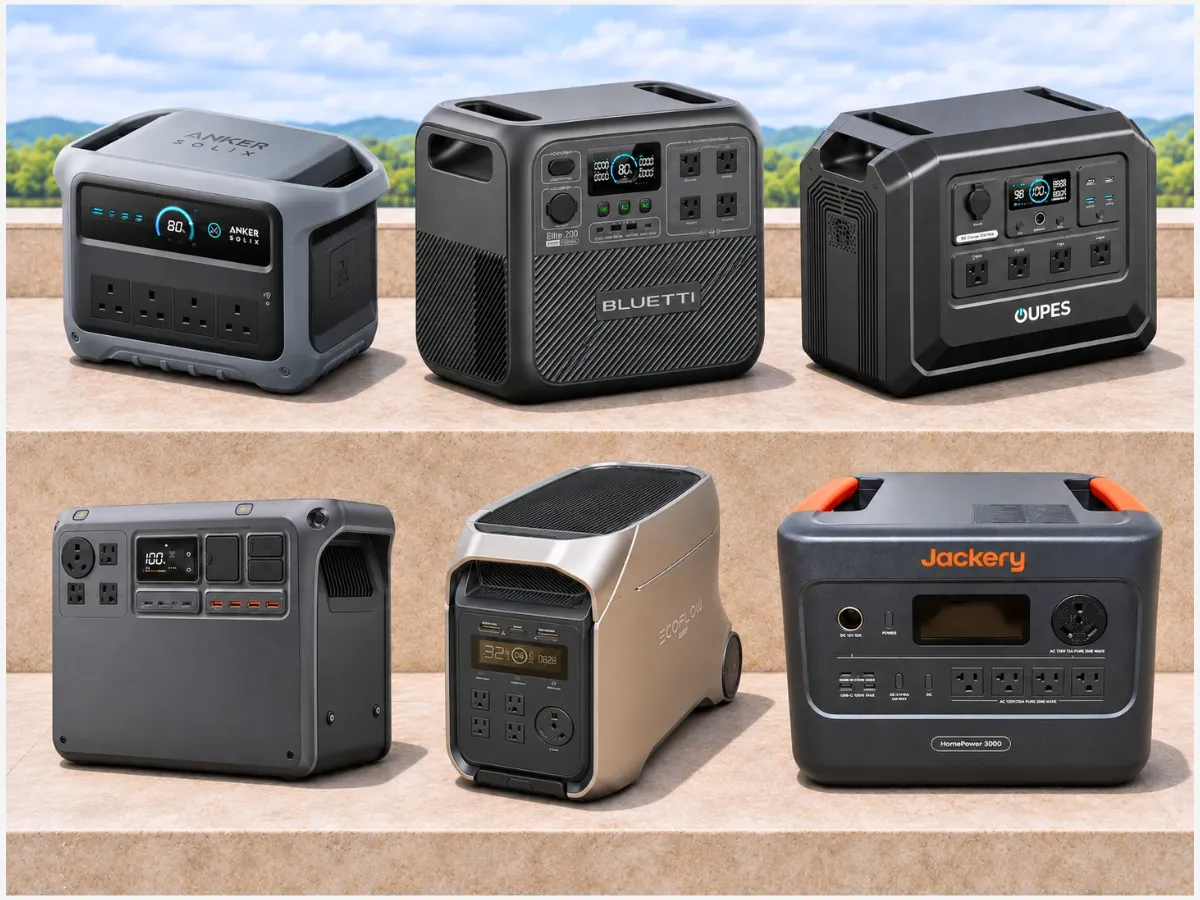
The Anker SOLIX C1000 Gen 2 is our best overall portable power station for car camping and short household outages. Its manageable handling and quick wall charging make it a practical starting point when you can recharge between sessions.
Choosing among the best portable power stations for home backup and camping comes down to the job. BLUETTI offers more appliance reserve, OUPES is the budget alternative when the saving is worthwhile, and DJI suits compatible creator equipment. EcoFlow provides an expansion route, while Jackery offers more storage in one standalone unit.
The Ranking
Our top Picks
Compare productsScores follow each individual review’s criteria. The products appear in editorial order; their overall scores are not a shared ranking.
Best Overall
Anker SOLIX C1000 Gen 2
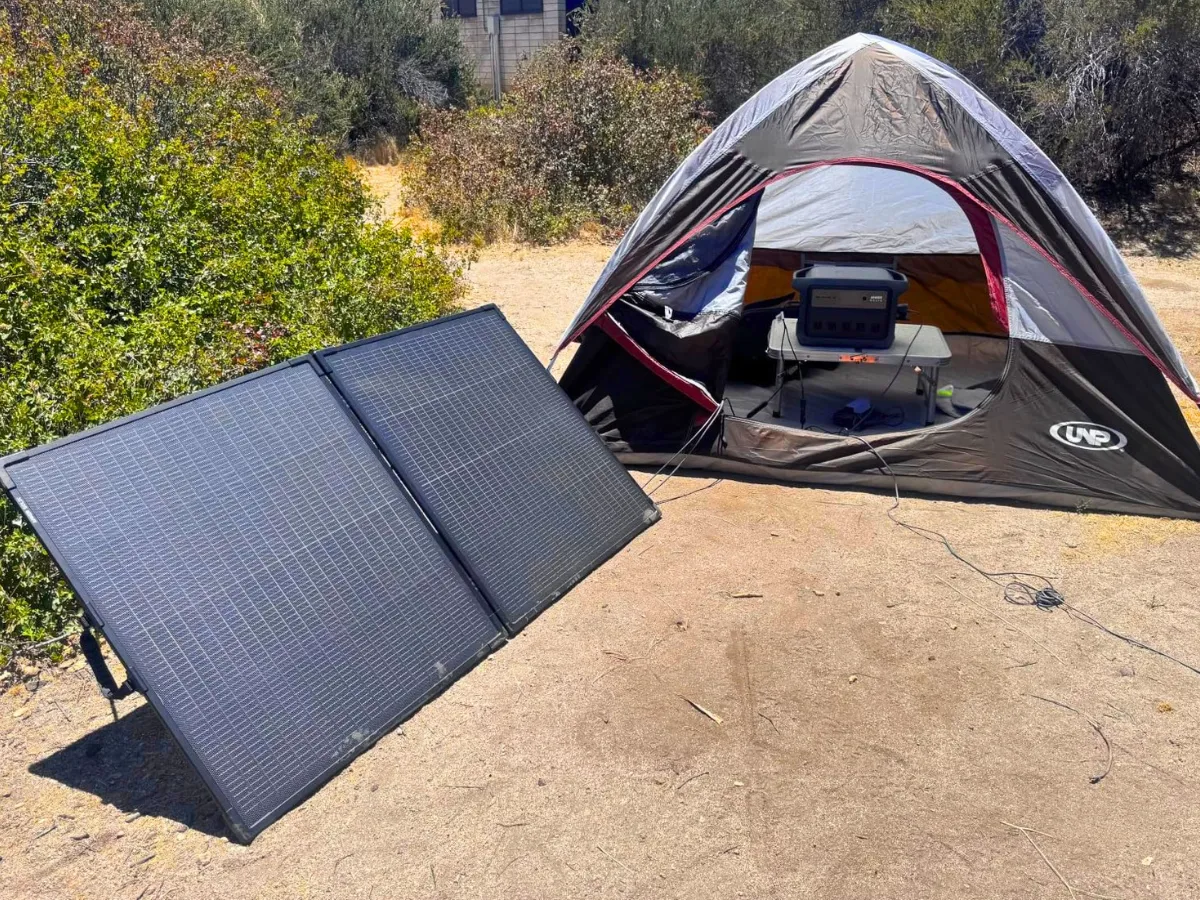
Quick wall charging and manageable carrying make Anker our starting pick for camping and short outages; fixed capacity limits longer backup.
View criterion scores
View measured results
| Measure | Result | Conditions |
|---|---|---|
| Standard wall recharge | Reached displayed full charge in about an hour | Standard mode; depleted battery at the start |
| Router and modem backup | Ran for nearly a full day | Tested network equipment only; continuous operation |
| Kettle use | Completed six boils before a seventh stopped partway through | One liter per boil; no recharging between cycles |
| Microwave use | Completed the short heating task | Tested Panasonic microwave with a water load |
| Combined appliance use | Operated without shutdown during the sustained check | Cooktop, workstation, and network equipment connected together |
| Included-panel solar charging | Displayed charge increased during the one-hour check | Clear midday sky; no connected output loads |
| Charging noise | Reduced-rate charging was quieter than Standard charging | Same indoor measurement distance and background conditions |
View features and specifications
- LiFePO4 battery
- 1,024Wh rated capacity for portable power and selected household backup loads.
- AC output
- 2,000W rated continuous output; 3,000W advertised peak.
- Fast wall charging
- Standard charging reached displayed full charge in about an hour during the evaluation.
- Solar charging
- Includes a 200W Anker panel; the station supports up to 600W solar input with compatible equipment.
- USB-C and app controls
- High-power USB-C connections for compatible devices; app settings control charging rate, charge limits, and output timeouts.
- Fixed battery capacity
- No expansion-battery support, so future runtime needs must fit the built-in storage.
Reasons to buy
- Standard wall charging finished in about an hour.
- Completed kettle and microwave tasks and kept network equipment running.
- Easier to move between a vehicle and campsite than larger backup units.
- Included solar panel restored charge during the clear-sky outdoor check.
Reasons to consider another
- No compatible expansion-battery option.
- Sustained heating drains the battery quickly.
- Fans become noticeable during faster charging and demanding use.
- Large adapters can block adjacent sockets; cables need separate organization.
The C1000 Gen 2 is the easiest starting point here when the station will move between home and a vehicle. Its compact shape and handles helped with loading and nearby campsite placement, without the handling burden of the larger backup models.
Our kettle and microwave checks supported short cooking tasks, while the router-and-modem setup kept operating through a long session. Those uses explain its appeal better than the output label alone: it handles useful jobs, provided the workload fits between recharges.
Wall replenishment is central to that recommendation. Standard charging was convenient in our evaluation, so a stop with outlet access could prepare the station for another session.
Basic output switching remains on the unit. Charging-rate changes, charge limits, timeout settings, and UltraFast activation involve the Anker app; configure those preferences before leaving small loads connected unattended.
Faster charging and demanding appliance use brought more noticeable fans. Bulky adapters also crowded neighboring sockets, and the panel cables needed separate packing space.
The purchased panel restored charge during our clear-sky check, but a panel cannot enlarge the battery's overnight reserve. Unlike the original C1000, Gen 2 has no supported expansion-battery connection.
Choose Anker for frequent repositioning and short backup sessions with dependable recharge opportunities**.** Move toward BLUETTI or Jackery for more built-in reserve, or EcoFlow if future expansion is part of the plan.
Photo gallery
Best Value
BLUETTI Elite 200 V2
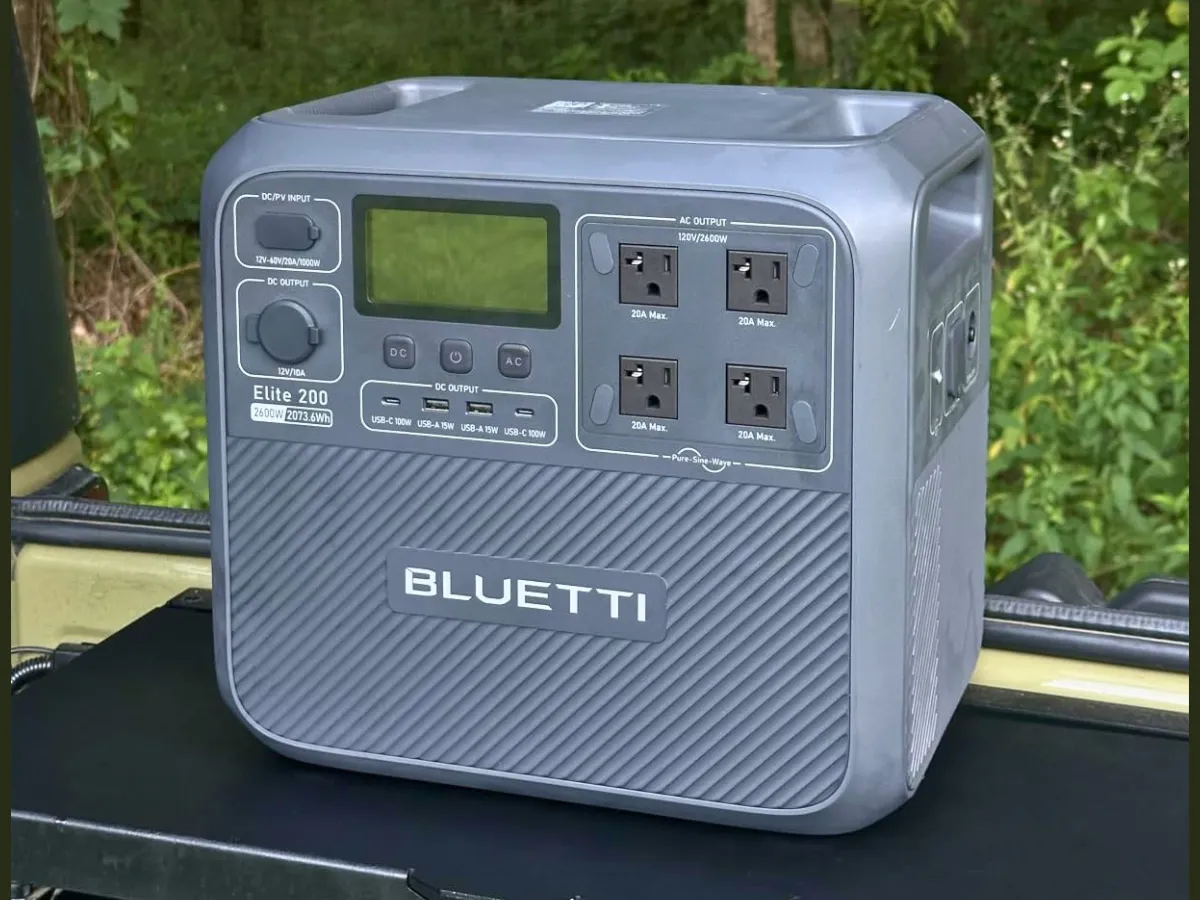
Useful appliance reserve and quick replenishment make BLUETTI a value pick at a competitive price; heavy carrying and fixed storage are the compromises.
View criterion scores
View measured results
| Measure | Result | Conditions |
|---|---|---|
| Refrigerator backup | Powered the test refrigerator overnight and into the following day | Full-size LG refrigerator; moderate indoor temperature; routine door openings |
| Appliance operation | Handled demanding household loads within the tested operating range | Battery-only AC operation |
| Motor starting | Started the tested appliances without an output shutdown | Table saw and commercial blender; repeated starts |
| AC recharging | Turbo mode provided a quick route back to full displayed charge | Depleted battery; AC charging |
| Fan noise | Cooling became clearly audible during demanding operation | Heavy-use testing |
| Backup transfer | Connected equipment stayed operating through the recorded interruptions | Tested computer and auxiliary-load setup |
| USB-C operation | Powered both connected USB-C loads simultaneously | Compatible devices and cables |
View features and specifications
- Battery
- 2,073.6Wh LiFePO4 (LFP); no supported battery expansion
- AC output
- Four 120V outlets sharing 2,600W total; pure sine wave
- Charging
- Up to 1,800W AC input; Standard, Turbo, and Silent profiles
- Solar input
- Up to 1,000W; 12–60V input range; 20A maximum
- USB and DC ports
- Two 100W USB-C ports, two 15W USB-A ports, and one 12V/10A vehicle-style outlet
- Handling and controls
- 53.4 lb with dual handles; physical output buttons and Wi-Fi/Bluetooth app controls
Reasons to buy
- Strong AC output for demanding household appliances.
- Useful refrigerator backup through an overnight outage and into the following day in our test.
- Turbo charging helps replenish the battery during a short window of available power.
- Two high-output USB-C ports can power compatible laptops directly.
Reasons to consider another
- Its substantial weight makes stairs and frequent vehicle loading a chore.
- No supported expansion-battery connection.
- Cooling fans become audible during demanding operation.
- Advanced backup settings require the app, and critical computing needs an appropriately specified UPS.
The Elite 200 V2 makes sense when you want more stored energy than Anker or OUPES provides, but prefer one standalone station over an expanded battery arrangement. Its value rests on how much useful appliance support you receive for the complete purchase price.
Our recorded LG Smart Inverter refrigerator evaluation covered compressor cycling and ordinary door use. It demonstrated extended backup in that setup, giving the recommendation a more useful basis than estimating endurance from a single running-power reading.
Demanding AC operation and simultaneous compatible USB-C loads added flexibility. The direct laptop connections kept adapters out of the household sockets, while Turbo charging made replenishment practical.
Its weight changes where it belongs. Plan a position close to the appliances it supports rather than treating it as a station you will carry repeatedly around a campsite.
BLUETTI provides physical output controls and a front-panel Settings Mode for functions including charging modes and ECO settings. The app adds monitoring and control through Bluetooth or Wi-Fi, although our records do not establish long-term connection reliability.
AC-on standby consumption matters when a light load remains connected for hours. Battery expansion is unavailable, so buy enough reserve for the intended period without useful input.
Choose it for appliance backup when its price justifies the capacity and you can move it occasionally. EcoFlow is the more relevant alternative if you expect to add storage; Anker remains easier to justify when carrying dominates the decision.
Photo gallery
Best Budget
OUPES Mega 1 Lite

Fast charging and direct laptop power make OUPES a budget alternative when discounted; noise, hard grips, and mixed near-limit output need consideration.
$499.00Check price on AmazonView criterion scores
View measured results
| Measure | Result | Conditions |
|---|---|---|
| Charging progress and behavior. | Fast charging made short replenishment opportunities useful, although charging activity continued after displayed full. | Fast AC sessions with displayed charge tracked separately from subsequent charging activity. |
| Refrigerator startup and sustained AC use. | The refrigerator setups started successfully. Moderate-load operation was consistent; performance near the published AC limit varied between sessions. | Different refrigerator setups and separate sustained-load checks. Refrigerator runtime depends on the appliance and its cycling. |
| Direct charging and adding another device. | Compatible laptops charged without their AC adapters. Some connection changes briefly interrupted delivery while output renegotiated. | Compatible laptops and multi-device USB-C setups; results do not establish identical behavior with every cable or device. |
| AC enabled without a connected load, plus fan behavior during use. | Leaving AC active reduced the displayed reserve overnight. Fast charging and demanding output made the fans conspicuous. | AC-on standby observations and charging/output sessions. These are practical takeaways rather than isolated internal-loss or standardized acoustic measurements. |
View features and specifications
- Battery
- 1,024Wh LiFePO4 battery; no external battery expansion
- AC output
- Manufacturer-rated 2,000W continuous output with 4,500W surge
- Charging options
- AC wall outlet, solar, vehicle, and combined AC-plus-solar charging
- Solar input
- Supports up to 800W through an Anderson connection with MPPT control
- Output connections
- Four AC outlets, two USB-C ports rated up to 140W each, two USB-A ports, and one 12V car socket
- Controls and backup
- Physical output buttons, Cleanergy app connectivity, pass-through charging, and EPS backup
Reasons to buy
- Fast AC recharging helps when access to power is brief.
- Direct USB-C charging frees AC sockets from laptop adapters.
- Physical output buttons remain useful when app monitoring drops.
- Compact body is manageable for short moves around the home or vehicle.
Reasons to consider another
- No external battery expansion.
- Loud fans during fast charging and demanding AC use.
- Hard handle edges concentrate pressure on fingers and palms.
- App interruptions and inconsistent near-rated output need consideration.
The MEGA 1 Lite is worth considering when its price meaningfully undercuts the alternatives. Its nominal battery-and-output class is similar to Anker's, but the ownership experience gave us more reasons to be selective.
Fast AC replenishment was its strongest convenience. Compatible laptops charged directly through USB-C, and the physical output buttons remained useful when phone monitoring became frustrating.
Cleanergy sessions included disconnections, slow updates, and a stalled firmware check. Adding another USB-C device also sometimes caused a brief interruption while the connection renegotiated.
Our refrigerator setups started successfully. Sustained operation near the published AC ceiling was less consistent, so we would choose the Lite for loads that leave working room below that limit.
Short carries were manageable, but the rigid handle edges pressed into fingers and palms as the carry continued. Fast charging and demanding output also brought intrusive fan sound.
Those compromises make price decisive. If Anker costs only a little more, or the expandable standard MEGA 1 is similarly priced, the Lite needs a specific advantage for your devices to remain the better buy.
Choose it for a defined short-outage or laptop workload at a meaningful saving**.** Skip it for frequent long carries, quiet-room charging, or a setup dependent on continuous operation near rated output.
The Lite has no external battery expansion. Its manual also excludes medical equipment and precision instruments.
Photo gallery
Editor’s Pick
DJI Power 2000

DJI combines appliance capability with compatible drone-battery charging; its strongest appeal is to creators who accept the weight and accessory costs.
View criterion scores
View measured results
| Measure | Result | Conditions |
|---|---|---|
| Usable AC energy | Delivered a substantial share of rated storage through AC | Complete discharge with a steady connected load |
| Appliance operation | Heating element and kettle operated without interruption | Combined-appliance session |
| Rated-output operation | Maintained the rated load during the short check | Resistive load; test stopped manually |
| Protection and motor starting | Overload protection activated; the shop saw started successfully in a separate test | Separate load-bank and saw checks |
| RV air conditioning | Compressor cycled normally without interrupting operation | Tested air conditioner and TT-30 connection |
| Laptop charging | Delivered output close to the port’s rating | Single 16-inch MacBook Pro connection |
| Wall charging and noise | Full recharge took about an hour and a half; Standard charging was quieter | U.S. household supply; separate charging-mode observations |
| Backup continuity | Workstation and monitors kept running without visible interruption | Repeated mains interruptions |
| DJI battery charging | Recharged Air 3 and TB30 batteries through dedicated cables | Separate compatible battery-and-cable arrangements |
View features and specifications
- Battery capacity
- 2,048Wh LFP battery for compatible appliances and electronics
- AC output
- Up to 3,000W continuous output, shared across AC outlets
- USB-C charging
- Four ports: two rated up to 140W and two up to 65W
- SDC connections
- Two ports for compatible DJI charging cables and accessories
- Battery expansion
- Manufacturer-supported expansion up to 22,528Wh
- Controls
- Physical controls plus DJI Home app monitoring and settings
Reasons to buy
- Operated demanding appliances and started the tested workshop saw.
- Recharged fully from a U.S. household outlet in about an hour and a half.
- Kept our workstation and monitors running through mains interruptions.
- Direct charging supports the compatible DJI batteries we checked.
Reasons to consider another
- Heavy for repeated stair carrying and awkward vehicle loading.
- Solar charging and car-socket DC output require accessories.
- Large adapters can crowd outlets and obscure the display.
- The lower bypass limit needs a separate appliance-load plan.
The Power 2000 earns our Editor's Pick because it offers a distinct workflow advantage. Dedicated arrangements successfully charged our Air 3 and TB30 batteries, giving owners of compatible DJI equipment a reason to choose it beyond ordinary AC outlets.
It also ran the heating element and kettle together, started the tested workshop saw, and supported the recorded RV air-conditioner setup. Our workstation and monitors continued operating through mains interruptions.
The handling was less convenient than the appliance capability. Its fixed handles felt balanced in short carries and stair checks, but lifting into a vehicle remained awkward; oversized adapters also crowded the front connections and partly blocked the screen.
A hardware switch selects Fast or Standard Recharge Mode, while app-enabled Super Recharging is separate. Standard charging was quieter in our comparison, and basic AC control does not require opening the app.
The accessory plan deserves attention before purchase. Solar charging needs additional hardware, and supplying an appliance through a car-style DC connection requires an SDC accessory because the station lacks a built-in socket of that type.
That output accessory is different from equipment used to charge the station from a vehicle. Check whether the proposed arrangement needs the same SDC ports for several jobs.
Choose DJI when compatible flight-battery charging is part of a recurring production routine**.** For ordinary electronics, Anker offers a simpler mobile starting point; for a larger expandable household setup, compare EcoFlow.
DJI documents supported expansion batteries, but our review did not operate a maximum-capacity system. Check its lower US bypass limit separately from standalone battery output.
Photo gallery
Best Premium
EcoFlow DELTA 3 Ultra Plus
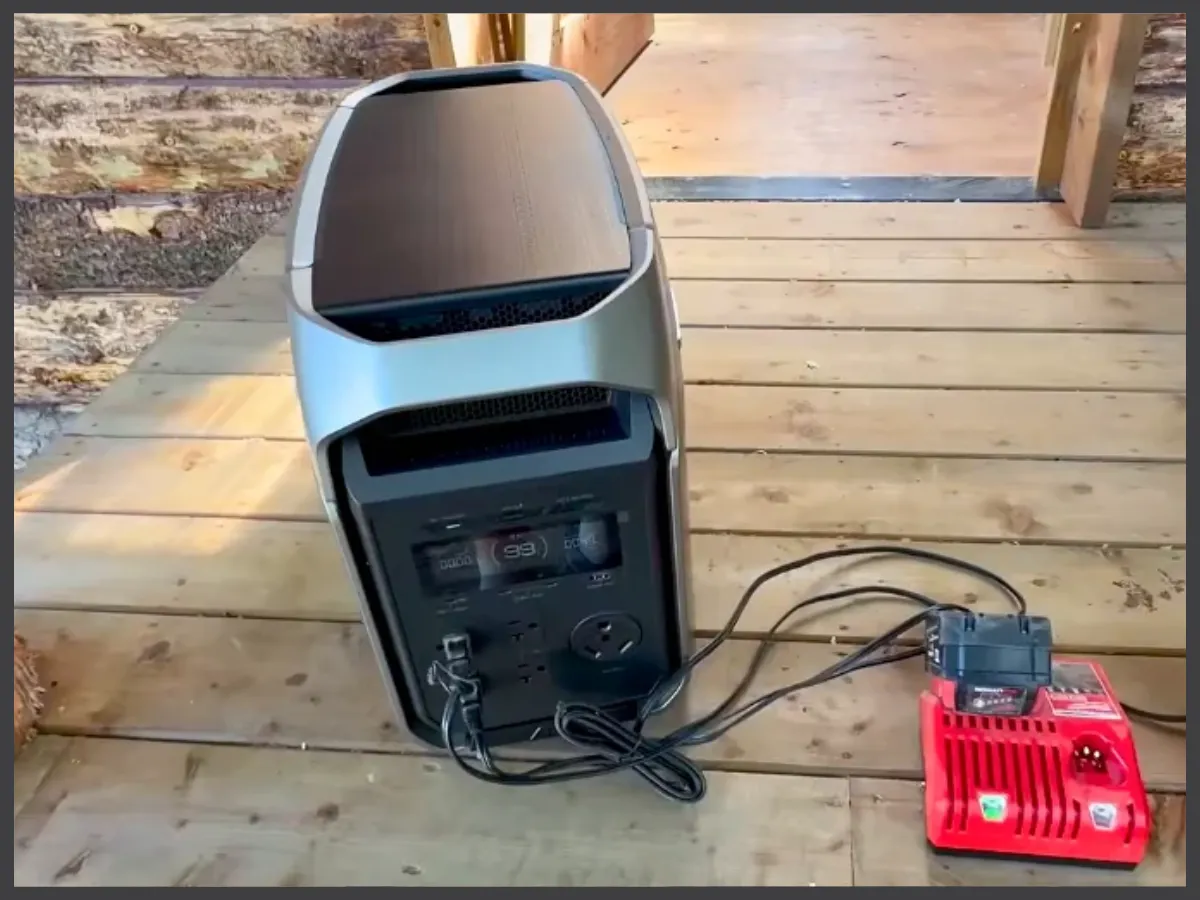
Expandable storage and substantial 120V appliance output make EcoFlow our premium pick; lifting weight, cooling noise, and system cost need planning.
View criterion scores
View measured results
| Measure | Result | Conditions |
|---|---|---|
| Usable AC energy | Delivered a substantial share of rated storage; usable output varied between runs. | Appliance-load and resistive-load discharge tests. |
| Sustained AC output | Maintained rated continuous output without shutting down. | Sustained maximum-rated-load test. |
| Standby consumption | Battery charge declined with AC enabled, even without connected appliances. | Unloaded standby check; estimated from the battery display. |
| UPS backup operation | The desktop and router continued operating without rebooting. | Repeated simulated outages with both devices connected. |
| Operating noise | Quieter under light demand; cooling fans became clearly audible under heavy load. | Separate light-load and maximum-output sound checks. |
| Hybrid charging | Restored charge quickly using the combined charging setup. | Compatible solar input and EcoFlow Smart Generator 4000 operating together. |
View features and specifications
- 3,072Wh LiFePO4 battery
- Stored energy for household essentials, with compatible extra batteries available to extend runtime.
- 3,600W continuous AC output
- Powers compatible demanding appliances through the U.S. model’s 120V outlets.
- Dual solar inputs
- Supports up to 1,600W of combined solar charging with a compatible panel configuration.
- Dedicated RV connection
- Includes a TT-30R outlet for compatible 120V RV hookups.
- Backup and output-priority controls
- Offers automatic battery switchover and Smart Output Priority for managing connected equipment.
- App and on-device controls
- Physical buttons handle basic switching; the EcoFlow app provides charge limits and additional settings.
Reasons to buy
- Strong sustained output for demanding compatible appliances.
- Kept our desktop and router running during outage checks.
- Supported battery expansion and flexible charging options.
- Dedicated RV outlet alongside household, USB, and DC connections.
Reasons to consider another
- No 240V output from the U.S. unit.
- Substantial lifting weight, even with wheels.
- Audible cooling under heavy sustained demand.
- Additional batteries and charging accessories increase the complete-system cost.
The DELTA 3 Ultra Plus suits a buyer building a backup plan rather than buying a battery for occasional charging. Its main advantage is the ability to begin with the station and add compatible storage if operating-duration requirements grow.
Our sustained-output check completed without a shutdown, and the connected desktop and router stayed operating through simulated input interruptions. Those results support selected appliance and home-office use within the documented connection limits.
Keep the model identity clear. The reviewed US Ultra Plus supplies 120V; it is not DELTA Pro 3, and adding a battery does not create 240V service.
EcoFlow lists compatible DELTA 3 Max Plus and DELTA Pro 3 extra batteries. Confirm the adapter and cable requirements for the intended configuration instead of assuming that a same-brand battery completes the system.
Basic power and AC switching remain on the station. Finer preferences use the EcoFlow app, and shared limits apply to the smaller USB-C pair and the Anderson/car-style DC connections.
X-Fusion needs separate understanding: supported inverter assistance can draw down the battery when incoming power does not cover demand. Remaining plugged in does not necessarily mean the reserve is increasing.
The physical arrangement matters just as much. Wheels help on suitable surfaces but cannot lift the case over a cargo lip, while heavy sustained output made the cooling clearly audible.
Choose the Ultra Plus when expansion and compatible charging equipment are part of a realistic plan**.** Jackery is a simpler fixed-capacity alternative; a smaller station is more appropriate when frequent lifting is unavoidable.
Our quick hybrid-replenishment result came from the solar-and-Smart-Generator arrangement evaluated. Budget for that equipment before treating its charging behavior as a reason to buy the station alone.
Photo gallery
Best Upgrade Pick
Jackery HomePower 3000 review
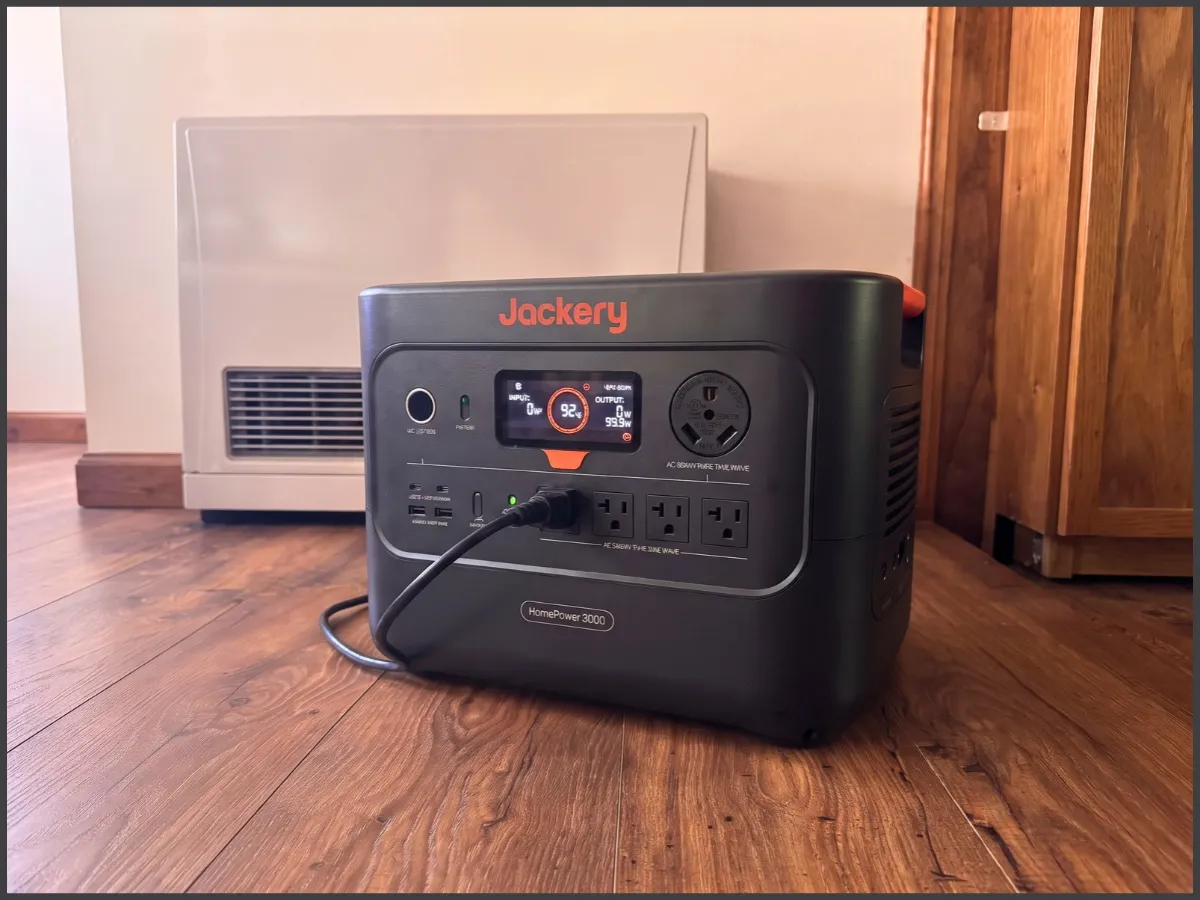
Jackery offers more standalone reserve than smaller portable batteries; heavy carrying, outlet restrictions, and no expansion remain important.
$1,499.00Check price on AmazonView criterion scores
View measured results
| Measure | Result | Conditions |
|---|---|---|
| Usable energy | More energy reached the load in the lighter AC discharge tests than in the heaviest test. | Separate constant-load runs at light, medium, and heavy demand. |
| Sustained AC output | The dedicated 30A outlet handled the combined load without shutting down. | Twenty minutes of continuous use through that outlet. |
| Wall charging | About two hours and fifteen minutes from displayed empty to full. | AC charging from a 15A wall supply. |
| Backup transfer | The desktop stayed running. The separate router-and-switch test recorded no dropped packets. | Simulated utility interruptions with the equipment used for each test. |
| Powered-off storage | The display still showed full charge after thirty days. | Inverter and screen off, at room temperature. The display cannot establish that no energy was lost. |
Reasons to buy
- Delivered much of its rated battery energy in our discharge tests.
- Handled sustained high demand through the dedicated 30A outlet.
- Recharged quickly from the wall, with a quieter mode available.
- Responded promptly to app commands; basic controls remain on the unit.
Reasons to consider another
- Cannot accept extra batteries or supply 240V appliances.
- Heavy to carry, without wheels to help on level ground.
- Household outlets and wall-connected bypass have lower power limits.
- Fans become more noticeable under heavy demand.
The HomePower 3000 is an upgrade for someone who has outgrown a smaller station but still wants one battery case. Its appeal is additional built-in reserve, rather than assembling an expandable system.
Our dedicated TT-30 outlet check supported sustained demanding use, and the circular saw started in a separate session. The household outlet group has a lower allowance, so the station's full output is not available through every connection arrangement.
Wall-connected bypass has another, lower limit. Check both operating modes before leaving an appliance group behind the station as backup.
The desktop remained operating during our interruption check, and the separate network setup stayed connected. These observations do not override the manual's restrictions for equipment requiring uninterrupted power.
Output switching is available on the hardware. The app adds monitoring, schedules, and Quiet Charging; commands responded promptly in our sessions, although we did not verify every app function without internet access.
Quiet Charging reduced fan disturbance during its recorded check. Heavy AC use was more audible, so that setting should not become a promise of quiet overnight operation.
The side handles allow a two-handed lift, but there are no built-in wheels. Give the unit a regular position near its intended loads and leave room for charging cables and ventilation.
Choose Jackery when more storage in one standalone unit solves the problem and your appliance list is settled. Consider the expandable, wheeled HomePower 3600 Plus if those ownership needs differ, or EcoFlow if expansion is central to the plan.
The HomePower 3000 has no battery expansion or 240V output. We did not complete a refrigerator-runtime test for it, so its discharge findings should not become a promised duration for your kitchen.
Photo gallery
Analysis and buying decisions
Which Portable Power Station Is Best for Home Backup?
BLUETTI Elite 200 V2 is our value starting point for fixed-capacity appliance backup, while Jackery HomePower 3000 suits buyers who want more standalone reserve. Choose EcoFlow DELTA 3 Ultra Plus when adding compatible batteries is part of the plan.
Start with the appliances that must remain available, then decide how long you need them and where the station will operate. None of these recommendations should be read as an automatic whole-house backup solution.
Which Portable Power Station Is Best for Camping?
Anker SOLIX C1000 Gen 2 is our first choice within this lineup for vehicle-based camping with access to recharging. It balances useful appliance operation with handling that suited moving between a vehicle and nearby campsite.
DJI Power 2000 becomes more relevant when compatible drone-battery charging is part of the trip. OUPES belongs on the budget shortlist when the saving compensates for its grip discomfort and fan noise.
For a phone, small light, and occasional laptop charging, consider a smaller station or suitable power bank first. Every product here may be more equipment than that job requires.
More Portability or More Stored Energy?
Think through the most awkward lift before comparing how far a station can roll. A vehicle's cargo lip or a flight of stairs can decide the purchase.
Anker's handling suited movement between a vehicle and nearby campsite. OUPES was manageable over short distances but became less comfortable to grip, while DJI's balanced handles could not remove the burden of its weight.
BLUETTI and Jackery are easier to justify near their regular loads. EcoFlow's wheels help on suitable surfaces, but the station and any extra batteries still need somewhere accessible to operate and recharge.
Should You Buy an Expandable Portable Power Station?
Anker C1000 Gen 2, BLUETTI Elite 200 V2, OUPES MEGA 1 Lite, and Jackery HomePower 3000 require you to buy sufficient built-in reserve. Extra solar panels improve replenishment opportunities, not stored energy after sunset.
DJI Power 2000 and EcoFlow DELTA 3 Ultra Plus have documented expansion routes. Check the exact battery generation, cables, and adapter before assuming compatibility.
Extra battery capacity generally extends operation within the existing output limits. It does not automatically raise inverter power or change the voltage supplied.
For a closer look at smaller fixed storage, a larger standalone battery, and an expandable platform, see our Anker C1000 Gen 2 vs BLUETTI Elite 200 V2 vs APEX 300 comparison.
Can a Portable Power Station Run a Refrigerator?
A suitable station can run a compatible refrigerator, but successful compressor starting and useful runtime are separate requirements. BLUETTI's recorded refrigerator evaluation supports that particular setup; the other products' appliance or discharge checks do not establish the same duration.
Check starting demand and average energy use as the compressor cycles. Room temperature and door use also affect the reserve required.
Heating creates a different problem. A station can complete a kettle boil yet remain a poor choice for sustained electric heating, because a load that fits the output limit can still consume the battery quickly.
Treat successful motor starts as evidence for the appliance used. The recorded discharge tests likewise do not support a universal efficiency ranking when loads and conditions differ.
Best Budget or Best Value: Which Matters More?
Compare the package you will use, including necessary panels and adapters. A station-only offer can look cheaper than a complete kit until the missing connections reach the cart.
Best Budget concerns the entry cost and compromises you accept. Best Value concerns useful capability relative to the complete price, so BLUETTI and OUPES should not be judged by the same shortcut.
Check delivery, warranty eligibility, and the return process before ordering. A discount is less useful when the unit cannot arrive before you need it or the accessories do not fit the intended setup.

ABOUT THE AUTHOR
Engineer Md Jamal
Engr. Md Jamal is an "Electrical Engineer" with more than 13 years of experience in appliance performance. As the founder of Wits Engineer, the publication covers Power & Energy, Living, Cleaning, Electronics, and Kitchen.
View author profile